
UK New Rules: Everything a Sri Lankan Applicant Should Know Before Applying for a UK Visa
The United Kingdom remains one of the most sought-after destinations for Sri Lankans seeking tourism, higher education, business opportunities, professional development, and family visits. Every year, thousands of applicants submit UK visa applications from Sri Lanka with the expectation of securing entry clearance successfully. However, UK immigration policies continue to evolve, and staying informed about the latest developments is essential before lodging any application.
Over the past two years, the UK Government has introduced several significant immigration reforms affecting visitor visas, student visas, digital immigration systems, compliance requirements, and application assessments. While many of these changes do not specifically target Sri Lankan nationals, they directly influence how applications are reviewed and processed.
Understanding these developments before applying can help applicants prepare stronger applications, avoid unnecessary refusals, and improve their overall chances of success.
Understanding the UK’s Changing Immigration Environment
The UK immigration system has undergone substantial transformation since Brexit. The Home Office has increasingly focused on digitalisation, enhanced compliance measures, stricter verification processes, and greater scrutiny of applicant intentions.
The objective is clear. The UK Government wants to ensure that genuine visitors, students, workers, and migrants can continue entering the country while reducing misuse of immigration routes.
For Sri Lankan applicants, this means that documentation quality, financial evidence, travel history, credibility, and consistency across application forms have become more important than ever before.
A common misconception among applicants is that visa approval depends primarily on income or bank balances. In reality, UK visa officers assess the entire application holistically. They examine whether the applicant’s circumstances, intentions, finances, and supporting evidence collectively demonstrate genuine eligibility.
This approach has become increasingly evident in recent immigration policy updates.
The UK Has Fully Embraced Digital Immigration
One of the most important changes applicants should understand is the UK’s transition towards a fully digital immigration system.
The traditional reliance on physical immigration documents is gradually being replaced by electronic records and digital status verification. The UK Government has expanded its eVisa framework and continues moving towards fully digital immigration management. Visitor visa holders and other categories are increasingly being linked to online immigration records rather than relying solely on physical visa documentation. (VisaHQ)
For Sri Lankan applicants, this means maintaining accurate digital records and ensuring that personal information provided during the application process remains consistent across all stages of the immigration journey.
Applicants should carefully review passport details, travel histories, addresses, employment records, and financial information before submission because discrepancies can become more visible within digital verification systems.
New Scrutiny Measures Affecting Sri Lankan Applicants
One of the most significant developments that Sri Lankan applicants should be aware of is the increased level of scrutiny currently being applied to certain nationalities by the UK Home Office.
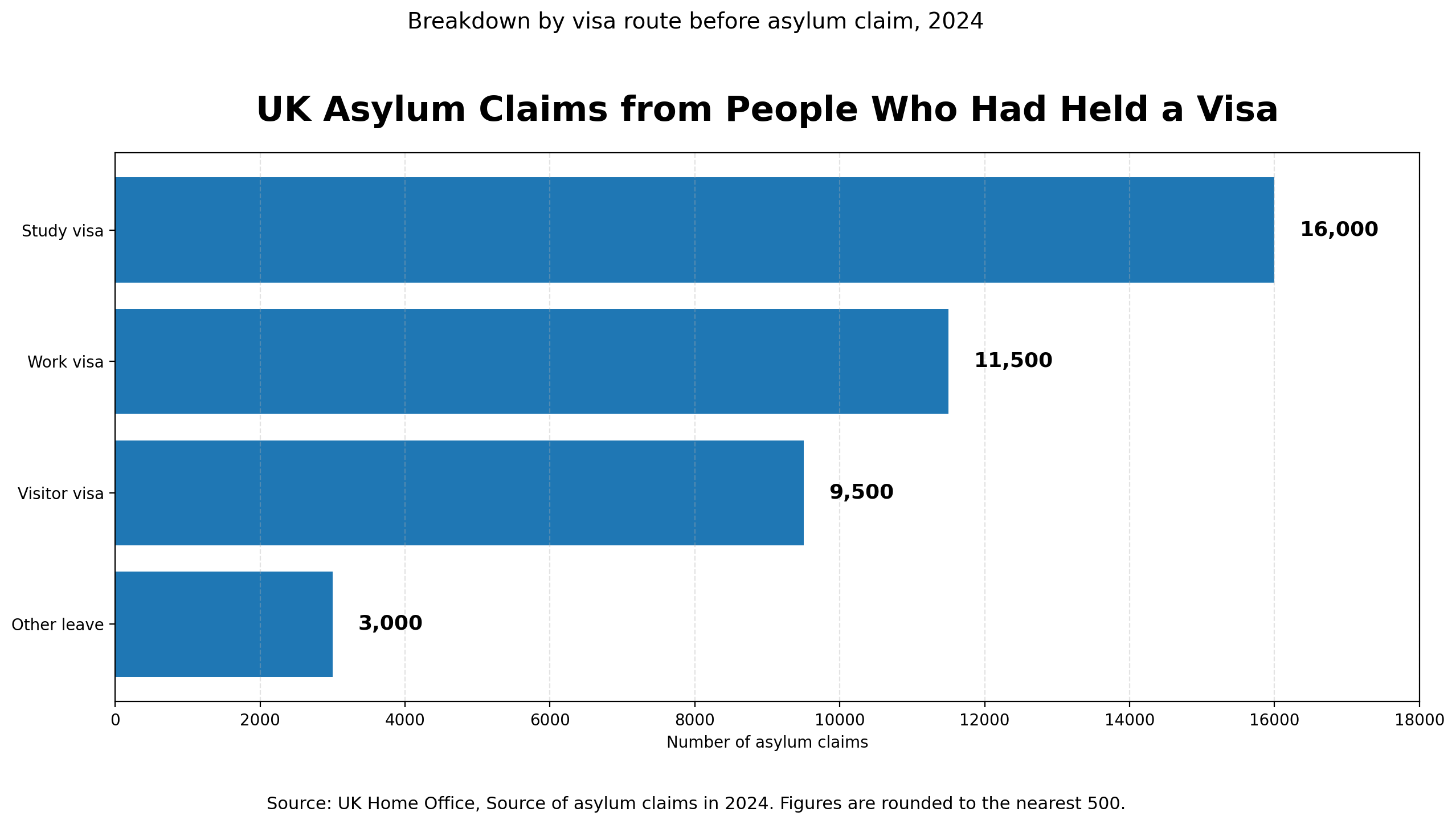
In recent policy discussions and immigration reforms, Sri Lanka has repeatedly been mentioned alongside Pakistan and Nigeria as countries that have generated higher levels of concern regarding visa overstaying and asylum claims after lawful entry into the United Kingdom. According to Home Office data, these three nationalities accounted for a significant proportion of individuals who initially entered the UK on valid work or study visas and later sought asylum. As a result, the UK Government has introduced additional assessment mechanisms designed to identify applications that may present a higher immigration risk.
It is important to understand that there is currently no blanket ban on UK visa applications from Sri Lanka, nor has the UK Government announced any official restriction preventing genuine Sri Lankan applicants from obtaining visas. However, the Home Office has indicated that it is developing more sophisticated risk assessment models in collaboration with the UK’s National Crime Agency. These systems are intended to identify patterns among applicants who may be considered more likely to overstay their visas or seek asylum after arrival.
For genuine Sri Lankan applicants, this effectively means that applications may now receive closer examination than in previous years. Financial documents have become particularly important under these enhanced review procedures. Visa officers are increasingly expected to examine bank statements, income sources, employment records, educational backgrounds, and overall applicant profiles to determine whether the information presented supports a genuine temporary intention to visit, study, or work in the United Kingdom. Unexplained deposits, inconsistent financial activity, weak employment evidence, or unclear study plans may attract additional questions during the assessment process.
Student visa applicants are likely to experience greater scrutiny regarding the credibility of their educational intentions. The Home Office wants to see a clear connection between an applicant’s previous qualifications, current professional experience, and proposed course of study. Applications that appear to show weak academic progression or unrealistic career objectives may face increased challenges under the newer assessment framework.
Similarly, visitor visa applicants should expect greater emphasis on demonstrating strong ties to Sri Lanka. Property ownership, established employment, active businesses, family commitments, financial investments, and previous international travel history can all help support the argument that the applicant intends to return home after their temporary stay in the United Kingdom.
The key message for Sri Lankan applicants is not one of alarm but of preparation. The UK’s immigration system is increasingly moving towards intelligence-led decision-making, where credibility, consistency, and evidence quality play a central role. Genuine applicants who provide accurate information, maintain transparent financial records, and present a logical purpose for travel continue to obtain UK visas successfully. However, the margin for error has become smaller, making careful application preparation more important than ever before.
Visitor Visa Applications Are Being Assessed More Carefully
The UK Visitor Visa remains one of the most popular visa categories among Sri Lankan travellers.
Whether the purpose is tourism, family visits, business meetings, conferences, or short-term activities, applicants must demonstrate genuine temporary intentions. The Home Office continues to place significant emphasis on proving strong ties to the home country. Visa officers want reassurance that applicants intend to return to Sri Lanka after their visit. Evidence commonly reviewed includes employment commitments, business ownership, property ownership, family responsibilities, educational commitments, and financial stability.
Many refusals occur not because applicants lack money but because the overall application fails to clearly establish why the applicant will return to Sri Lanka after the visit. Applicants should therefore focus on presenting a coherent story supported by documentary evidence rather than submitting large volumes of unrelated documents.
Financial Evidence Has Become Increasingly Important
Financial evidence remains one of the most scrutinised areas of any UK visa application. The Home Office expects applicants to demonstrate that they can fund their intended stay without relying on public funds or engaging in unauthorised work. For Sri Lankan applicants, bank statements should reflect genuine financial activity rather than sudden deposits made shortly before application submission. Visa officers frequently analyse:
- Income sources
- Savings patterns
- Employment earnings
- Business income
- Tax records
- Property income
- Sponsor relationships
Any unusual transactions should be properly explained.
Applicants often underestimate the importance of consistency between declared income, employment details, and bank records. When financial evidence contradicts other aspects of the application, credibility concerns can arise quickly. A strong financial profile is not merely about having money. It is about demonstrating transparency and authenticity.
Student Visa Applicants Must Be More Strategic Than Ever
The United Kingdom remains one of the leading destinations for Sri Lankan students pursuing undergraduate, postgraduate, and doctoral qualifications. However, recent immigration discussions and reforms have increased scrutiny of student visa applications across various aspects of the process. Universities and education providers now place greater emphasis on ensuring that applicants are genuine students with realistic academic progression plans.
Applicants must clearly explain:
- Why they selected their chosen programme
- How the course relates to previous education
- How the qualification supports future career plans
- Why the UK was selected over alternative destinations
Generic statements and poorly prepared Statements of Purpose often weaken otherwise strong applications. A well-structured academic rationale is becoming increasingly important because visa officers seek evidence that applicants are genuinely pursuing education rather than using study pathways primarily for immigration purposes.
Graduate Route and Post-Study Work Considerations
One area receiving considerable attention among prospective students is the future of post-study work opportunities. The UK Graduate Route remains attractive because it allows eligible graduates to remain in the UK after completing their studies and gain professional experience. However, immigration policy discussions continue to evaluate various aspects of post-study work arrangements, making it essential for students to stay updated before commencing their studies. (universitiesuk.ac.uk) Sri Lankan students should therefore focus first on selecting a quality academic programme that aligns with long-term career objectives rather than choosing institutions solely based on post-study work expectations. Educational value should remain the primary consideration.
Credibility Assessments Are More Important Than Documents Alone
Modern UK visa decision-making increasingly relies on credibility assessments. This means that officers evaluate whether the applicant’s overall profile makes sense. For example: A person claiming to be employed full-time but showing no salary transactions may face credibility concerns. A student seeking a course unrelated to previous qualifications without proper explanation may face questions regarding genuine study intentions. A visitor claiming tourism purposes but providing limited travel plans may struggle to establish credibility. Therefore, successful applications are often those where every element supports a logical narrative. The strongest applications tell a consistent and believable story.
Travel History Continues to Strengthen Applications
Although travel history is not mandatory, it remains a positive factor. Applicants who have previously travelled internationally and complied with immigration laws often find it easier to demonstrate credibility.
Previous visits to countries such as:
- Singapore
- Malaysia
- Thailand
- UAE
- Schengen States
- Australia
- New Zealand
- Canada
can strengthen an applicant’s profile by demonstrating a history of lawful travel and return. However, applicants without international travel history should not be discouraged. Strong employment, financial stability, family commitments, and clear travel purposes can still result in successful applications.
Increased Focus on Compliance and Immigration Integrity
The UK Government has repeatedly emphasised immigration compliance and system integrity through recent policy changes. New immigration measures introduced during 2026 reflect a broader strategy aimed at strengthening controls, increasing enforcement, and improving oversight across multiple visa categories.
For Sri Lankan applicants, this means greater importance is placed on accuracy. Submitting misleading information, altered documents, or inaccurate declarations can have serious long-term consequences. Even minor inconsistencies may trigger additional scrutiny. Applicants should ensure that every statement made in the application form can be supported by documentary evidence if requested.
Common Mistakes Sri Lankan Applicants Should Avoid
Many refusals stem from preventable errors rather than ineligibility. One common mistake is submitting excessive documentation without a clear structure. Another frequent issue is failing to explain large bank transactions. Some applicants provide generic cover letters that do not address their personal circumstances. Others overlook inconsistencies between application forms and supporting documents. Many student applicants also fail to adequately explain course progression or future career objectives. A carefully prepared application often performs better than a large but poorly organised document bundle. Quality consistently outweighs quantity.
Why Professional Preparation Matters
UK visa applications have become increasingly sophisticated. While many applicants successfully prepare their own applications, professional guidance can help identify weaknesses before submission. A qualified consultant or immigration adviser can assist in:
- Structuring evidence
- Reviewing documentation
- Identifying inconsistencies
- Strengthening explanations
- Preparing Statements of Purpose
- Assessing financial evidence
The goal is not simply to submit an application but to submit one that clearly demonstrates eligibility and credibility.
Final Thoughts
The UK remains one of the most accessible and attractive destinations for Sri Lankan travellers, students, professionals, and families. However, immigration policies continue to evolve, and applicants must remain informed before beginning the application process. The most successful UK visa applications are no longer solely on financial strength or academic qualifications. They rely on credibility, transparency, consistency, and strong supporting evidence. Whether you are applying for a visitor visa, student visa, or another UK immigration route, understanding the latest rules and expectations can significantly improve your chances of success. Before submitting your application, take the time to evaluate your profile carefully, organise your documentation properly, and ensure that your application presents a clear and convincing narrative. In today’s immigration environment, preparation is often the difference between approval and refusal.